
$0.00
What Does Grief Feel Like: Symptoms of the Grieving Process

What does grief feel like? Grief can often have a mind of its own and is on its own timeline. It might not look like what you expect. You may feel overwhelming sadness, but also numb, irritable, forgetful, and physically unwell. You might even wonder if something else is wrong with you, or whether grief could really be the cause of all of this.
Grief can affect your emotions, thoughts, and interactions with people. It can cause physical symptoms and may affect your faith. While everyone experiences grief differently, there are some common signs of grief. Recognizing them can help you understand what you’re feeling and reassure you that you’re not alone.
Having Trouble Explaining What Grief Feels Like?
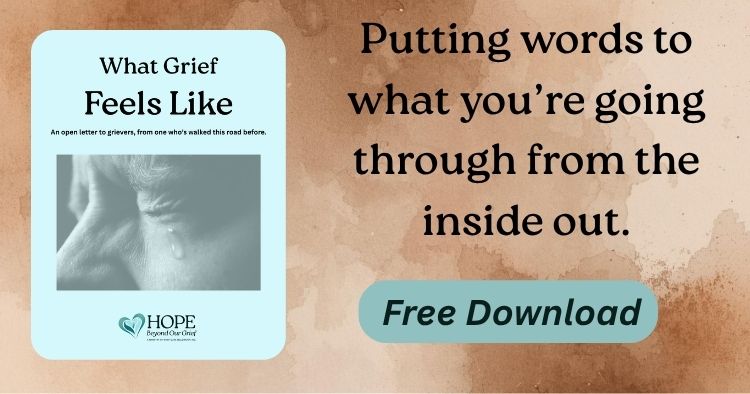
Grief can be difficult to understand, and harder to describe to family and friends. Our free download, What Grief Feels Like, puts some of those experiences into words so you can better understand what you’re experiencing, and share it with those who care.
Grief is a journey, and not everyone’s journey will look or feel the same. Some may not even realize they’re grieving, whether actively or inactively. Some may not even realize they need to grieve.
Unfortunately, bottling up our emotions is not an effective long-term coping method, especially when it comes to dealing with grief. When we experience loss, the feelings of sadness, anger, and confusion can become overwhelming. Suppressing these emotions may provide temporary relief, but over time, acknowledging what you are experiencing and sharing it with somone safe may help grief feel more manageable.
What Are Some Emotional Signs of Grief?
These are some common emotional symptoms of grief to help you decipher this confusing time.
- A deep sadness or longing
- Irritability
- Numbness, detachment, disbelief
- Bitterness
- Guilt, regret, or relief
- Inability to show or feel joy
- Anxiety and fear
It is important to acknowledge and express our feelings, allowing ourselves to process the grief in a healthy way. By doing so, we can begin to heal and find a path forward, rather than remaining trapped in a cycle of unresolved emotions.
Many of these symptoms of grief can also appear in cases of depression. If your symptoms are interfering significantly with daily life, you might want to consider Christian-based counseling or other professional healthcare support.
What Are Some Physical Symptoms of Grief?
Typically, bereavement is stressful, so grief and grieving often present physical symptoms in the same way that other stresses do. The pain of grief when losing someone you care about is one of the most stressful life events. Our bodies process and experience grief physically in many ways, and the effects on your body can include:
- Fatigue
- Lack of motivation
- Sleeping significantly more or less than normal
- Appetite changes and digestive problems
- Headaches and muscle tension
- Racing heart or heaviness in the chest
- Restlessness
More Ways Grief Affects Daily Life
Grief can have many effects on your daily life. The following are possible, and common, but not every person will experience all of them. Each griever’s experience will be unique, and may include some or many of these, and other effects not listed here.
- Forgetfulness
- Difficulty concentrating or making decisions
- Brain fog/grief fog
- Repetitive thoughts and memories
- Avoiding others
- Feeling misunderstood
- Questioning God
- Difficulty praying or studying the Bible
- Wanting company, but not, at the same time
When Processing Grief Feels Impossible
Some grief experiences can be especially challenging to navigate. If you find yourself experiencing one of the following, it doesn’t mean you’re grieving incorrectly, but it may mean additional support may be helpful.
Traditionally, Complicated Grief is what people experience when severe, persistent symptoms of grief interfere with the ability to function. This can happen to anyone following a loss. It’s not that you’re doing anything wrong. As you process what has happened, it can overwhelm you.
Disenfranchised Grief is a type of grief that is not generally acknowledged, validated, or supported by others. Sometimes this happens where you feel more of a connection to the person who died than may be expected. For instance, when a famous person you were a big fan of dies, or someone you only saw occasionally, like a third cousin or a local fixture in your community. It’s not someone the people around you might expect you to be strongly affected by losing, so they don’t get it, and you feel alone. (This may also happen after a suicide loss, where stigma may create a difficult grief environment.)
On the other hand, if you have a difficult relationship with the person who has died, you may have less intense feelings and be more likely to feel relief. The grief experience here will likely look different but can also become complicated by guilt over your relief, or suppressed and delayed grief. You seem to be moving on far more quickly than most would anticipate, which can be confusing.
Anticipatory Grief can also be difficult to cope with. Feelings of grief as you watch someone you love go through a long, terminal illness can become overwhelming. You might feel anxious and struggle to cope with your grief. The experience of grieving while still caring for the one you’re about to lose is unique and valid.
There is no universal timetable for healing from grief, but please know that if your grief is overwhelming, it’s okay, and even wise, to seek out help. A licensed Christian counselor or therapist can offer understanding and presence. Any new or persistent medical symptoms should be addressed with your healthcare professionals, rather than assuming ‘oh, that’s just grief pain.’
Self-Care While Grieving
There’s not one specific way to grieve, but the healing journey after the death of a loved one will take more than just time. Your body needs balance, even when your mind and heart believe there’s no such thing anymore. Prioritizing your physical well-being may be the last thing on your mind, but it will make a world of difference as you grieve the loss.
Daily movement is important. Spend regular time moving, without overdoing it; feed yourself healthy foods, with a few treats; take a few extra naps, and aim for a reasonable bedtime. These self-care strategies will help your nervous system regulate, which will encourage your heart, mind, and body – all critical processes for people who are grieving following the death of a loved one.
It’s Okay if Grief Is Hard To Express
Some people find it difficult to show emotion or talk about grief. Family and cultural expectations, or pressure to be strong, can make this even harder. Or you might just need time to process internally. Your feelings are still valid, even if you don’t know how to express them, you are allowed to feel them.
Please hear this: Grief is not weakness. When you are ready, acknowledge what you are experiening. You can do that in prayer, with a trusted friend or counselor, or in a journal. This may help you feel less alone as you process your grief.
John 11:35 tells us simply, “Jesus wept.”
Jesus, Lord of all creation, wept at the passing of his friend. Despite knowing that Lazarus would live again, Jesus, God in human form, still entered into the sorrow of this moment of loss. I would argue that he shows strength in acknowledging and processing His emotions and not feeling ashamed of them.
The Healing Process: Patience, Care, and Time
Grief can affect nearly every part of your life, and the intensity can change from one day or moment to the next. Feeling better for a while doesn’t mean you’ve ‘gotten over’ the loss, any more than a difficult time means you’ve lost your progress. Those ripples of grief are a natural part of grief.
Be patient with yourself. Take care of yourself, and allow those who care about you to walk beside you.
With time, care, and support, many grievers find the effects and symptoms gradually stabilize and become more manageable. When you are ready, explore our help for coping with grief and loss for encouragement, practical steps, strategies, and resources.